
When Tarot Reveals a Scarcity Story

Sometimes one tarot card is enough to start a conversation you didn’t realize you needed to have.
For me, that conversation began with the Five of Pentacles. There it was: two figures moving through the cold, beneath a brightly lit window. My attention went straight to what was missing - the uncertainty, the feeling of being outside something I wanted to be part of.
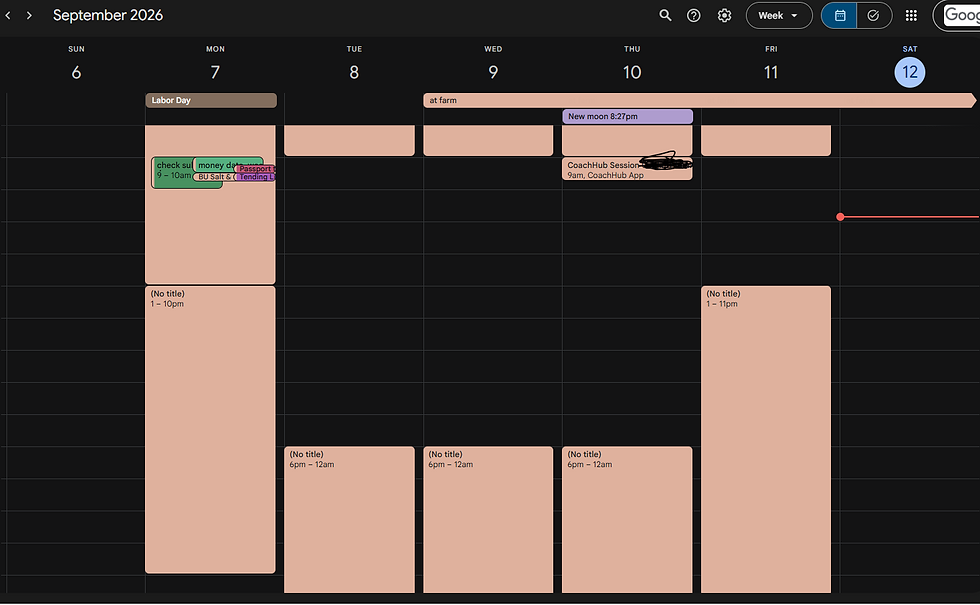
I recognized that feeling when I looked at my calendar. Open space where I wanted coaching sessions. Room that could feel like possibility, but that I was reading as evidence of not enough.
Meanwhile, I was actively engaged in income-producing work, with more on the calendar. But my attention had settled on the empty spaces, and the Five of Pentacles gave me a way to name what I was seeing.
My personal practice this month is to journal the same three questions every day, then pull one card after my pen has stopped moving. The writing comes first. The card joins the conversation afterward.
It can be tempting to keep pulling until a difficult card gets buried beneath something more reassuring. I understand the impulse. Nobody necessarily wants to sit down with their coffee and get personally addressed by the Five of Pentacles.
Drawing that card brought me back to a place that’s, for better or worse, part of my story. Instead of putting it back in the deck and ignoring the itchy sensation crawling up my spine - that familiar mix of lack, fear, shame, and scarcity - I looked at the whole image. My eyes moved beyond the two figures on the sidewalk to the window above them. The one holding the pentacles.
And I remembered the work I’ve done on my relationship with scarcity. I remembered the evidence that lack has never been the whole story, even when it’s the part I notice first.
Following the conversation
That card and I had a good, honest conversation. I could acknowledge the fear without judging myself for feeling it, and recognize what was supporting me without pretending the uncertainty had disappeared.
Then I put my deck down, leaving the Five of Pentacles face up, like I always do, and went about my day.
The next day, when I sat down to pull the cards for the weekly Caffeinated Tarot reading, I shuffled the Five back into the deck and focused on what the collective might need to hear.
The Five, of course, had opinions. Even after a very thorough shuffle, it was the first card I pulled.
I smiled. Okay, I whispered to the deck. Show me what we all need to hear.
And, quietly, I had a question for myself too: What do I still need to recognize here?
The Four of Pentacles and Six of Pentacles reversed followed. Yes, this reading was for the collective, but I saw myself in it. The conversation I’d begun the day before now had somewhere else to go.
Scarcity was the thread worth following. The additional cards gave me room to explore how that feeling connected to protection and to the way I give and receive.
I hadn’t kept pulling to make the Five disappear. I’d sat with it, and when it returned in the next reading, I was ready to listen to how the cards spoke to one another.

Five of Pentacles: Where has scarcity shaped my story?
The Five of Pentacles helped me notice how quickly I could turn an open calendar into a story about lack.
There are practical reasons to want more bookings. Income matters. Pulling a card doesn’t pay the mortgage, and pretending otherwise is a fairly expensive spiritual practice.
Still, there was a difference between wanting more work and treating the empty spaces as the whole picture. My skills hadn’t disappeared. Neither had the work I was doing to support my other income streams.
For this reading, the Five of Pentacles became an invitation to look at the story I was building around what I could see. Where was I focusing on absence? What evidence was I leaving out?
Recognizing scarcity didn’t require me to deny a real need. It gave me a chance to describe that need more accurately, without erasing everything already supporting me.
Four of Pentacles: What am I protecting now?
The Four of Pentacles brought the conversation closer to home. The figure holds a coin against their chest, with two more beneath their feet. There is something here to protect.
That mattered after the Five. I had resources. I had experience, time, and work in progress.
The question became how I was holding them.
Protecting what we’ve built can be wise. A budget can support us. Boundaries can preserve our energy. Choosing carefully where our time goes can give our creative work the attention it needs.
But protection can become a tight grip. We might save our best idea for later, hesitate to make an offer visible, or fill every quiet moment because open space feels unsafe.
This card invited me to ask whether my choices were supporting the life I wanted or simply helping me avoid the discomfort of uncertainty. What needed a clear boundary? Where might a little movement be possible?
The Four of Pentacles gave me a way to examine that distinction without making security itself the problem.
Six of Pentacles reversed: What needs to shift in how I give or receive?
The Six of Pentacles reversed opened a question about exchange.
In this reading, I approached the reversal as an invitation to examine where giving and receiving might feel strained. That could include the time I put into my work, the opportunities I make visible, and my willingness to let that work be supported.
Creating something and inviting people to pay for it are related tasks, but they aren’t the same task. I can write a thoughtful blog post or offer a simple spell, and still need to give someone a clear way to take the next step.
This card offered questions rather than a forecast. Was I giving my time with purpose? Was I making room to receive? Were my offers clear enough for someone to understand what was available?
There was also room to ask about harmony. An exchange doesn’t need to be perfectly equal at every moment to be nourishing. But over time, does it support me too?
What the three tarot cards made visible about scarcity
Together, these cards helped me see a relationship between feeling that there wasn’t enough, holding tightly to what I had, and examining how support could reach me.
They also brought me back to what I was already tending. The creative work taking shape. The paid work ahead. The email alerting me that an existing client had booked her sessions. Those things deserved a place in the picture alongside the open coaching appointments.
That feels connected to tending a home, too. We can stand in a room and see every unfinished task while overlooking the ways it already shelters us. Seeing what needs attention is useful. Seeing only what needs attention can make it difficult to recognize what we have built.
The reading didn’t promise that everything would work out. It helped me find a more useful place to act from. I could name what I wanted more of while giving the resources already here a job to do.
Try your own three-card scarcity spread
If this conversation feels familiar, give yourself a little quiet space with your deck. You don’t need to find the same cards I pulled. Let your own cards bring their images and questions to the conversation.
Shuffle and draw three cards:
Where has scarcity shaped my story?
What am I protecting now?
What needs to shift in how I give or receive?
Before reaching for a guidebook, notice where your eye goes in each image. What feels familiar? What surprises you? Write a few sentences about how each card connects to the question and to something happening in your life.
Then look at the cards together. Does one seem to respond to another? Is there a repeated image, gesture, or feeling? What becomes visible when you consider the whole spread?
If you want to add a card, name the question first. “What resource am I overlooking?” gives that next card a clear purpose. If you notice that you’re hoping to erase an uncomfortable answer, pause and return to the cards already on the table.
You can leave a question open. You can also decide an interpretation doesn’t fit. The cards are partners, not predictors; your lived experience belongs in the conversation.
Bring the reading into your day
Choose one practical action from what you noticed. That might be reviewing a budget, making an offer easier to find, asking for help, or setting a boundary around something that takes more than you can keep giving.
Before you close your journal, name one resource already available to you and how you could use it. Give it a specific role in your next step.
There may still be empty spaces on the calendar. There may also be work ready for your hands. This reading helped me see both.
If you’d like to see how these same cards spoke to the collective, you can listen to the Caffeinated Tarot reading that followed my personal pull here.
For an ongoing conversation with the cards, join Caffeinated Tarot each Monday for a three-card reading, reflective prompts, and a tiny ritual to carry into your week. Bring your coffee and whatever life is asking you to notice. There’s room for that conversation here.
I wrote a four-part series on creating a different relationship with money - start HERE.


Comments